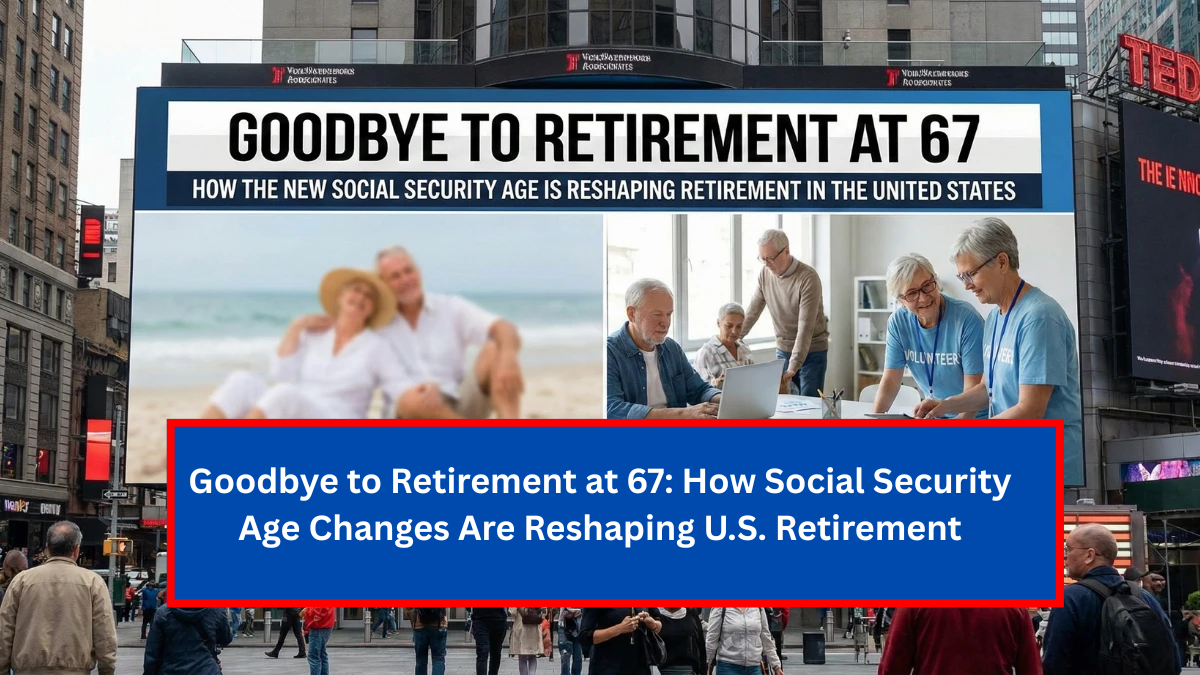
The long-standing idea of retiring at age 67 is being reconsidered as longer life expectancy, continued workforce participation, and evolving benefit incentives reshape when Americans choose—or are able—to collect Social Security. While the traditional Full Retirement Age (FRA) system remains in place, practical factors are shifting the real retirement timeline for millions of people.
This article explains what is changing, what remains the same, and how the Social Security Administration currently administers benefits.
What “Goodbye to Retirement at 67” Really Means
There is no new law eliminating retirement at 67. Instead, the phrase reflects how benefit calculations, delayed retirement credits, and earnings rules influence the most financially advantageous age to claim Social Security.
How claiming age affects benefits
- Age 62 (early claiming) – Permanently reduced benefits
- Full Retirement Age (66–67) – Full scheduled benefit
- After FRA – Monthly benefits increase through delayed credits
- Age 70 – Maximum possible monthly benefit
- Working at any age – Earnings limits apply before FRA
Why the Practical Retirement Age Is Shifting Later
Several factors are encouraging Americans to work longer and delay claiming benefits:
- Longer life expectancy
- Rising living and healthcare costs
- Greater financial security from higher monthly benefits
- Incentives built into Social Security for delayed claiming
These realities are pushing the effective retirement age beyond the traditional benchmark.
How Delaying Social Security Affects Monthly Income
For every year benefits are delayed beyond Full Retirement Age—up to age 70—monthly payments increase through delayed retirement credits. These increases are permanent and can significantly raise lifetime income for those who are able to wait.
Working Longer While Receiving Social Security
Americans are allowed to work while collecting Social Security, but rules differ by age:
- Before FRA – Earnings limits apply and may temporarily reduce benefits
- After FRA – No earnings limit, allowing unrestricted income
This makes continued work after FRA especially attractive for many retirees.
Who Is Most Affected by This Shift
The changing retirement landscape most impacts:
- Workers with limited retirement savings
- Individuals with longer life expectancy
- People relying heavily on Social Security as primary income
- Professionals capable of working beyond traditional retirement ages
What Has Not Changed
- The legal Full Retirement Age structure remains intact
- Early claiming at age 62 is still available
- Withheld benefits before FRA are later recalculated
- Claiming age remains a personal choice, not a requirement
Key Points to Remember
- Retirement at 67 has not been abolished
- Delaying benefits can significantly increase monthly income
- Working longer may help close income gaps
- Earnings limits end at Full Retirement Age
- The best claiming age depends on individual circumstances
Conclusion
“Goodbye to retirement at 67” represents a practical shift, not a legal one. As incentives increasingly favor delayed claiming and longer working lives, many Americans are redefining what retirement truly means. Understanding how age choices affect Social Security benefits is essential for making informed decisions in today’s economic environment.
Disclaimer
This article is for informational purposes only and does not constitute financial or retirement advice. Social Security rules and benefit calculations are subject to official SSA guidance and individual circumstances. Consult SSA resources or a qualified advisor for personalized planning.