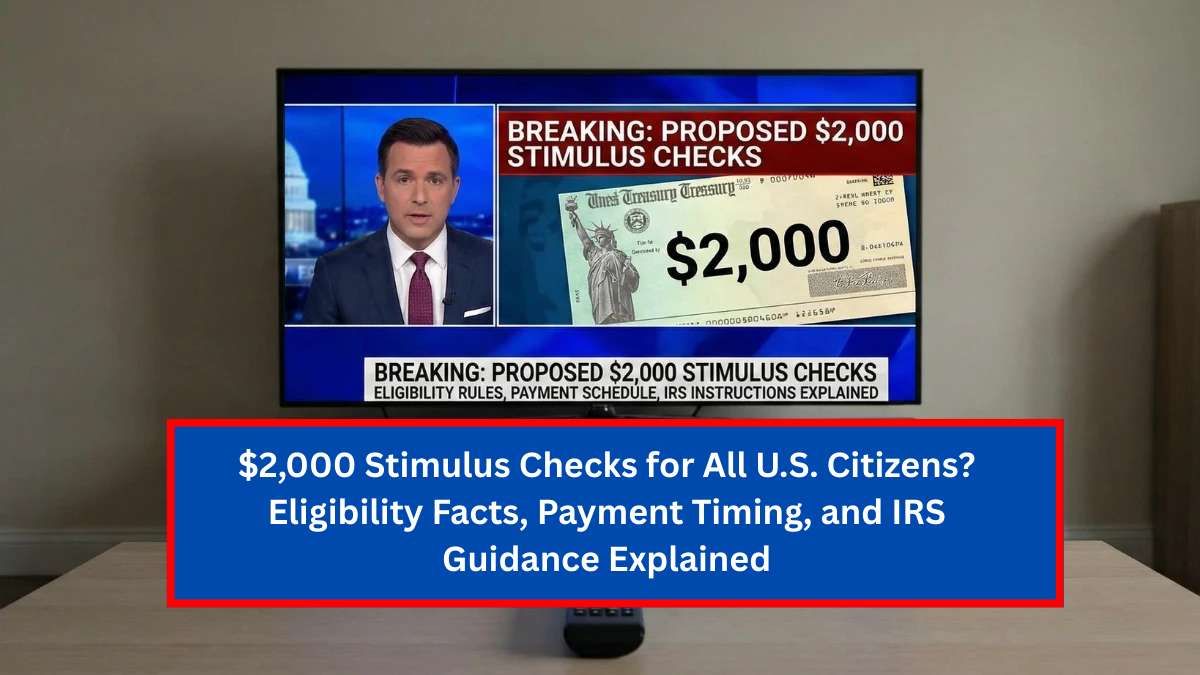
Claims about new $2,000 stimulus checks for all U.S. citizens are circulating once again, causing confusion about eligibility, payment timing, and whether the Internal Revenue Service has issued official instructions. While previous stimulus programs did provide direct payments, there is currently no approved plan authorizing a universal $2,000 stimulus check.
Most references to $2,000 payments are being misunderstood and are often connected to tax refunds or credit-related deposits rather than a new nationwide stimulus program.
What the $2,000 Stimulus Claim Really Refers To
The $2,000 figure does not represent a newly approved stimulus payment for every American. In most cases, this amount reflects individual tax refunds, reconciled credits, or adjusted withholding rather than a government-issued stimulus.
Claim vs. Reality
- $2,000 payment for all citizens – Not approved
- New federal stimulus announced – No official confirmation
- Tax refunds close to $2,000 – Possible
- IRS payments currently being issued – Yes
- Direct deposit available – Yes, if selected during filing
Who May Actually Receive Payments Near $2,000
Eligibility for deposits around $2,000 is not universal and depends entirely on individual tax situations. Factors that influence refund amounts include:
- Filing status, such as single, married, or head of household
- Total income and tax withholding
- Refundable credits claimed on the return
- Accuracy and completeness of tax information
- IRS verification and review results
Two taxpayers with similar earnings may receive very different refund amounts due to these variables.
When Payments Could Be Issued
For taxpayers who file electronically and choose direct deposit, refunds may arrive approximately 10 to 21 days after the IRS accepts the return, assuming there are no processing delays. Banks may require additional time, typically one to three business days, to post funds to an account.
Delays can occur if a return is flagged for review or requires manual verification.
Official IRS Instructions Taxpayers Should Follow
The IRS advises taxpayers to:
- File accurate and complete tax returns electronically
- Select direct deposit to receive refunds faster
- Use official IRS refund tracking tools to monitor status
- Avoid submitting amended returns unless instructed
There is no application or registration process for a new $2,000 stimulus payment.
Why Some Payments Take Longer Than Expected
Refunds near $2,000 often involve refundable credits or withholding adjustments, which may trigger additional IRS review. These reviews affect processing time, not eligibility, and are part of normal fraud prevention and accuracy checks.
What to Do If You Have Not Received a Payment
Taxpayers who are waiting for a refund should:
- Check their status using official IRS tools
- Monitor bank deposit notifications
- Watch for IRS correspondence by mail or online
- Contact the IRS only if directed or after standard timelines pass
Key Points to Remember
- No $2,000 stimulus check for all U.S. citizens has been approved
- Payments near $2,000 usually represent tax refunds
- Eligibility depends on individual tax circumstances
- The IRS does not require separate applications
- Only official IRS tools provide reliable confirmation
Final Thoughts
The claim that all U.S. citizens will receive $2,000 stimulus checks is not supported by any official government announcement. Deposits around $2,000 that some taxpayers receive are tied to personal tax processing, not a new stimulus program. Understanding how IRS payments work helps reduce confusion and prevents unrealistic expectations.
Disclaimer
This article is for informational purposes only and does not constitute tax or financial advice. Payment amounts, eligibility, and timelines depend on individual circumstances and official IRS determinations. Always rely on IRS notices and tools for accurate information.