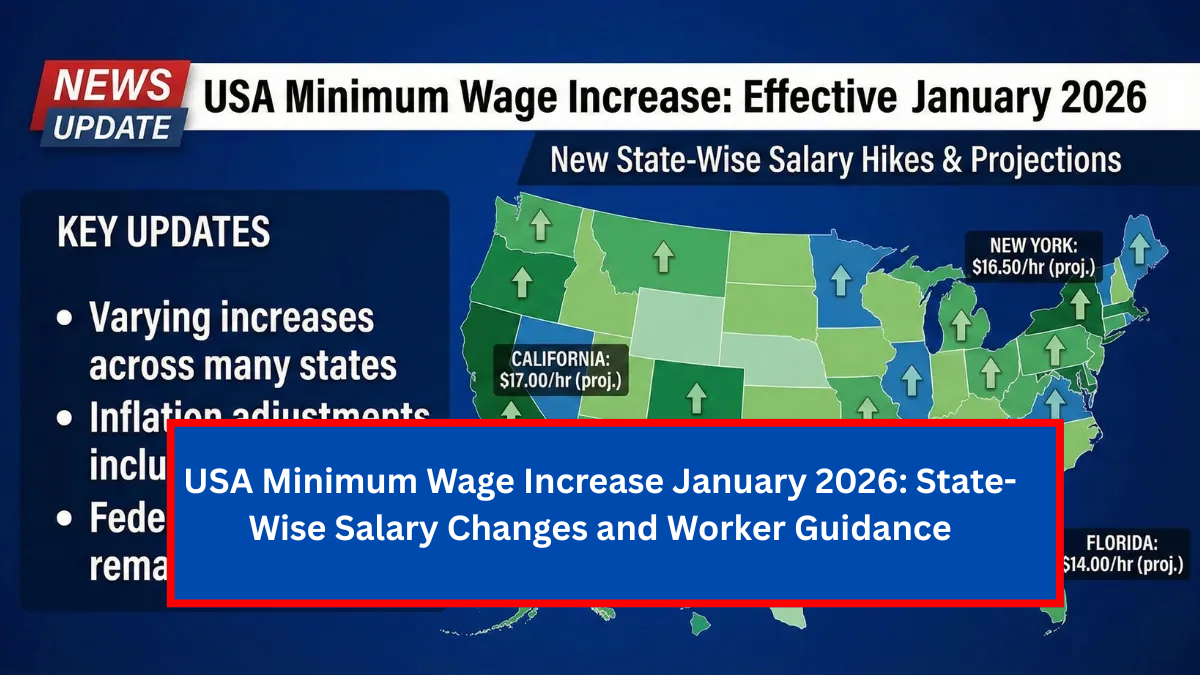
Starting in January 2026, minimum wage increases in several U.S. states and cities will take effect, impacting millions of workers nationwide. While there is no single nationwide wage hike that applies to all workers, many states and local governments adjust their minimum wages each year based on inflation formulas, voter-approved measures, or state legislation.
This article explains how the January 2026 increases work, which areas are affected, and how wage enforcement operates under federal and state law.
How Minimum Wage Changes Work in the United States
Minimum wage rules in the U.S. are set at three levels: federal, state, and local. Employers are legally required to pay workers the highest applicable wage among these levels. Oversight and compliance guidance are provided by the U.S. Department of Labor.
Minimum wage authority overview
- Federal level – Sets a fixed national minimum wage
- State level – Determined by legislation or inflation indexing
- City or county level – Established through local ordinances
- Employer requirement – Pay the highest applicable rate
- Effective date – Most changes take effect on January 1
Why January 2026 Matters for Workers
Many states legally link minimum wage increases to cost-of-living or inflation calculations, which automatically trigger new rates at the start of each year. The January 2026 changes reflect these scheduled adjustments rather than temporary or emergency wage hikes.
State-Wise Minimum Wage Increase Patterns in 2026
While exact wage amounts vary by state and city, common trends in 2026 include:
- Inflation-indexed wage increases
- Pre-scheduled step increases approved in earlier laws
- Higher minimum wages in large metropolitan areas
- No changes in states without adjustment provisions
Workers should review official state labor department announcements for the most accurate and up-to-date rates.
States Most Likely to See Minimum Wage Increases
States with laws tied to inflation adjustments or scheduled increases typically raise minimum wages every January. In many cases, these updates occur automatically without the need for new legislation.
What Has Not Changed in 2026
- No new federal minimum wage increase has been enacted
- Employers may continue paying above minimum wage levels
- Tipped and youth wage rules remain state-specific
- Enforcement continues through audits and worker complaints
Who Benefits Most From the 2026 Wage Increases
- Hourly workers
- Retail and food service employees
- Part-time and seasonal workers
- Workers in high-cost urban areas
Employer Responsibilities Under the 2026 Rules
Employers must:
- Update payroll and wage systems
- Display updated wage notices
- Pay the highest applicable minimum wage
- Comply with state and local ordinances
Failure to comply can result in fines, penalties, and back-pay requirements.
Key Points to Remember
- Minimum wage increases vary by state and locality
- January 2026 is a common effective date
- Local minimum wages may exceed state rates
- The federal minimum wage remains unchanged
- Employers must follow the highest applicable rule
Conclusion
The U.S. minimum wage increases taking effect in January 2026 reflect scheduled state and local adjustments, not a single nationwide wage hike. Workers should confirm their current wage rates with state and local labor departments, while employers must ensure full compliance with updated laws. Understanding how minimum wage authority works helps both employees and businesses prepare for annual wage changes.
Disclaimer
This article is for informational purposes only and does not constitute legal or employment advice. Minimum wage laws vary by state and locality and are subject to change. Workers and employers should consult official state labor departments or the US Department of Labor for confirmed wage rates.